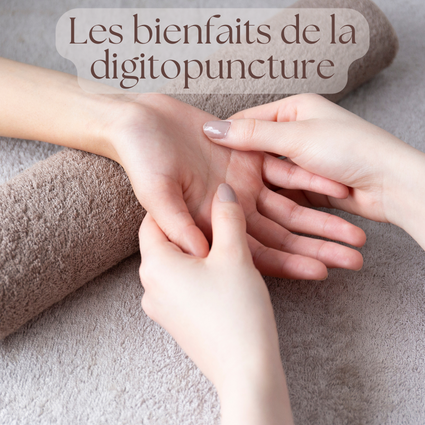
Your body already knows. This is what I tell every person who sits across from me: the body carries an ancient intelligence, a memory of circulation and balance that modern life has simply covered over. So, what is digitopuncture? It is one of the simplest doors to reopen that dialogue — no needles, no machines, just fingers placed consciously on precise points of the body.
Digitopuncture, also called acupressure, comes from traditional Chinese medicine. It consists of stimulating reflex zones to support the circulation of energy and ease what has become stuck. Nothing spectacular about it: careful attention at the right place, at the right moment, with a clear intention.
Because when energy circulates, something starts moving again. The breath drops, the shoulders release, the mind lets go of some of its vigilance. And what if that were simply about finally taking care of yourself again?
In short
- Digitopuncture — or acupressure — stimulates body points through finger pressure, without needles.
- It is based on a traditional framework: the twelve meridians, the five Yin organs and their associated viscera.
- Three gestures structure the work: tonification (clockwise), dispersion (counter-clockwise) and harmonisation.
- A point is worked for about six seconds, with intention placed on it.
- Digitopuncture session: €60, also available remotely.
- This is not a medical act: it is wellness support, always complementary to medical care.
What is digitopuncture, and how does it differ from acupuncture?
Digitopuncture is the needle-free version of stimulating acupuncture points. It is also called acupressure or digitopressure depending on the tradition. The principle remains the same: the body is crossed by energetic pathways, the meridians, marked by points that are both receptive and active. By pressing them, a signal is sent to the whole body.
Do you need to “believe” for it to work? No. But you do need to accept not explaining everything. The National Center for Complementary and Integrative Health notes that meridians and qi belong to the conceptual framework of traditional Chinese medicine rather than a proven anatomical structure. That does not stop anyone from experiencing real relief — and it is this lived experience we speak of here.
The difference with acupuncture
Acupuncture pierces the skin with fine needles; digitopuncture relies only on the pressure of a finger or thumb. In both cases the same point is targeted, but intensity and gesture differ.
This distinction matters in France. Acupuncture is generally considered a medical act reserved for doctors, and the illegal practice of medicine is sanctioned under the Public Health Code. Digitopuncture involves no skin penetration: it remains in the field of wellness and support, without diagnosis, treatment or promise of cure.
- Acupuncture: needles, regulated medical gesture, therapeutic framework.
- Digitopuncture / acupressure: finger pressure, non-invasive practice, wellness framework.
- In common: the same traditional map of the body and the same intention to restore circulation.
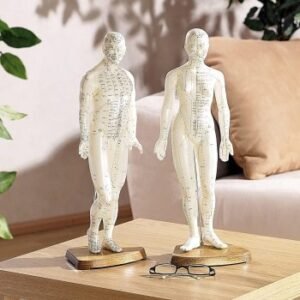
The 12 meridians, the 5 Yin organs and their viscera
Imagine an underground river flowing through the whole body. The meridians are those waterways; the acupressure points are the stones where you can place your hand and feel the current. Where the river clogs, something freezes: tension, heaviness, sleep that will not come.
The five Yin organs and their associated viscera
In the traditional reading, five Yin organs structure the whole system, each linked to a viscus that extends and mobilises it.
- Liver — gallbladder
- Heart — small intestine
- Spleen — stomach
- Lungs — large intestine
- Kidneys — bladder
Each of these pairs corresponds to a season, an emotion and a quality of energy. The liver holds restrained anger, the lungs hold grief, the kidneys hold old fear. When an emotion has never been allowed to leave, it eventually settles somewhere — and the acupressure point becomes a place where it can be released.
Two systems apart: heart protector and triple warmer
Two meridians do not follow the simple organ/viscera logic. The heart protector (or pericardium) shields the heart from emotional stress: it is the guardian of relationship to others. The triple warmer coordinates the three main territories of the body — upper, middle and lower — like an inner temperature regulator.
These two systems explain why the same session can both calm an agitated mind and release a tight belly. The body is not split into drawers: everything communicates.
The twelve pathways
In practice, stimulation follows this traditional sequence:
- Lung meridian, large intestine
- Stomach meridian, spleen
- Heart meridian, small intestine
- Bladder meridian, kidney
- Heart protector meridian, triple warmer
- Gallbladder meridian, liver
How is a point stimulated? Tonification, dispersion, harmonisation
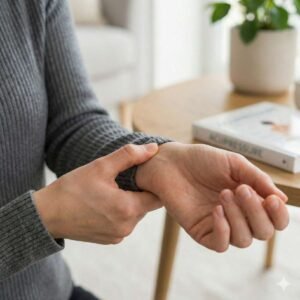
A point is not a button pressed at random. Direction, duration and intention all matter. This is where digitopuncture stops being mere pressure and becomes a language.
- Tonification — circular movement clockwise: nourishing, supporting, restoring momentum to depleted energy.
- Dispersion — circular movement counter-clockwise: releasing excess, clearing congestion, letting stagnation leave.
- Harmonisation — neutral pressure, without preferred direction: balancing, resting, accompanying.
And the duration? About six seconds per point. Not six minutes, not an hour: six seconds, but six seconds fully inhabited. The founding principle of this practice can be summed up in four words: energy follows thought. It is not the finger alone that acts — it is the attention placed under the finger.
I then notice the tensions that present under my hands. What happens if I slow down further? If the person exhales at the moment of pressure, everything changes. The simplest gesture in the world becomes a dialogue.
Complementary techniques: cupping and moxibustion
Digitopuncture rarely travels alone. Two practices often accompany it, to extend or amplify the movement that has begun.
Cupping
Cups placed on the skin create a gentle suction. They are used along the meridians where circulation feels sluggish, to “lift” what is stuck and restart the flow.
Moxibustion
A heated plant — mugwort — is held above a point or meridian to bring diffuse warmth. In traditional Chinese medicine, this heat is associated with supporting Yang and warming cold areas. The sensation is enveloping, never burning: heat is invited, not imposed.
None of this is treatment. These are wellness gestures, invitations offered to a body that sometimes simply needs a little warmth and movement again.
What digitopuncture can support
Let us be clear, once and for all: digitopuncture does not treat, cure or heal any disease. It does not make a diagnosis and never replaces medical advice, examination or treatment. Nothing on this page can substitute for a doctor’s guidance.
What it can do is support greater well-being. Here is what acupressure may accompany within a wellness framework:
- Easing stress and a sense of inner tension
- Supporting more peaceful sleep and easier falling asleep
- Releasing tensions held in the neck, back and shoulders
- Supporting digestive comfort and bloating
- Offering a pause, a breath and reconnection with the body
- Supporting a global wellness approach — never a promise of results
Acupressure for belly fat: what it can really offer
Let us be honest, because the question comes up often. Acupressure for belly fat does not melt fat, and anyone who promises otherwise is telling a story. What it can offer is something else, and it is not nothing: releasing abdominal tension held by stress, restoring awareness of bodily sensations, supporting the relationship to food and satiety. The rest is played out on the plate, in movement, in sleep — and, if needed, with a healthcare professional.
And situations that belong to a doctor?
Some situations are non-negotiable: epilepsy, stroke, mental health disorders, unexplained pain, chronic illness. These cases belong exclusively to medicine. If you live with any of these realities, your first appointment must be with a doctor — not an energy therapist. Only afterwards, if your practitioner sees value in it, a digitopuncture session may support your well-being, never replace your medical care.
The World Health Organization’s strategy for traditional medicine also invites a clear distinction between these fields and the integration of such practices only as a complement, within a safe framework. That caution is not timidity: it is respect for you.
Digitopuncture, a natural extension of the magnetic healer’s work
Why associate digitopuncture and magnetic healing? Because both speak the same language — the language of movement. Magnetic healing works through the hands, at a distance or in contact; digitopuncture places a precise finger where energy seemed to hesitate.
In my practice as a magnetic healer in Caen, this complementarity fits into three pillars that answer each other: nutrition, the emotional and the energetic. Digitopuncture belongs fully to the energetic pillar, while remaining open to the other two.
A session lasts about one hour. Price: €60. Sessions can also take place remotely when appropriate.
In conclusion
Digitopuncture is not a promise. It is a precise, gentle and respectful gesture offered to a body that already knows the path back to balance. No needles. Only presence, intention and the quiet intelligence of touch.
If this approach resonates with you, you are welcome to get in touch.