



From the Latin “glu”, meaning glue, gluten is a protein found in many cereals, such as wheat, spelt, barley, oats, rye and kamut.
In the 19th century, gluten was even used to stick posters on public boards.
It makes bread-making easier thanks to its sticky, elastic properties.
Thanks to it, dough is less crumbly, easy to knead and rises readily in the oven.
Widely used in industrial preparations for its technological advantages, gluten appears in many sauces, soups and ready meals.
A ubiquity that is far too invasive…
Highly manipulated genetically, wheat favours acidity in the body, damage to the intestinal flora and wall, which creates inflammation and deficiencies in iron, calcium and vitamin B12.
While true gluten intolerance, also called coeliac disease, affects about 1% of the population, many people also report increased sensitivity to this protein.
Coeliac disease is a chronic condition marked by major digestive discomfort (diarrhoea, bloating, abdominal cramps) and progressive undernutrition leading to fatigue or exhaustion, depression, joint problems, weight loss, infertility, osteoporosis…
In people with coeliac disease, contact with gluten gradually damages the wall of the small intestine, reducing optimal absorption of nutrients, vitamins and minerals.
Transformed into a real sieve, the intestinal barrier then lets undesirable molecules into the bloodstream, triggering immune and inflammatory reactions.
Complete avoidance of this substance becomes essential to avoid severe deficiencies and serious consequences.
This condition can be approached by looking for the trigger or the underlying cause, going beyond symptoms alone — always alongside medical care.
Omnipresent in ultra-processed products, gluten — mainly from wheat — slips into every moment of the day: croissant or brioche at breakfast, pasta at lunch, baguette in the evening, ham-and-butter sandwich on the go… the classic anti-life combo.
Are these the symptoms of a daily overdose?
It is true that ancient wheat has little in common with modern wheat: shortened stems for higher yield, genetically modified from 14 to 42 chromosomes — you can imagine what one extra chromosome does in humans; here the number is multiplied by three — exposed to plant-protection products to accelerate ripening…
This “new generation” cereal negatively impacts digestion, and one may wonder a posteriori whether it does more harm than good.
But other highly relevant factors must be taken into account when addressing digestive disorders, and not everything can be blamed on gluten alone.
Chewing first of all, which must be long and effective, and meals taken in calm, away from television, which is a major source of stress and anxiety.
Agitation and stress do not mix well with digestion, because gastric, biliary and pancreatic secretions are reduced to a minimum.
Important: nothing on this page replaces medical diagnosis or treatment. If you suspect coeliac disease or intolerance, see a doctor before changing your diet drastically.

Gluten sensitivity: the crumb too far?
Today many people report digestive reactions after eating gluten.
20% of the population may present sensitivity to this protein, leading, beyond digestive problems, to acid reflux, brain fog, insomnia, concentration difficulties, headaches, irritable bowel, Crohn’s disease, fatigue, allergies and intolerances, weight gain, muscle stiffness, joint swelling, chest pain, cramps, skin rashes, nausea… and more.
Irritable bowel syndrome resurfaces and all attention focuses on this “cereal killer”.
Conditions such as schizophrenia, hyperactivity and autism are also discussed in this context, as gluten contains opioids (related to the morphine family).
Gluten is not assimilable by the body; none of our cells finds a use for this unknown molecule.
Its elimination is problematic: it is stored in tissues, in the joints, and as kidney or gallstones.
It must be expelled one way or another as mucus through sneezing, a congested nose, watery eyes, sore throats and excessive sweating.
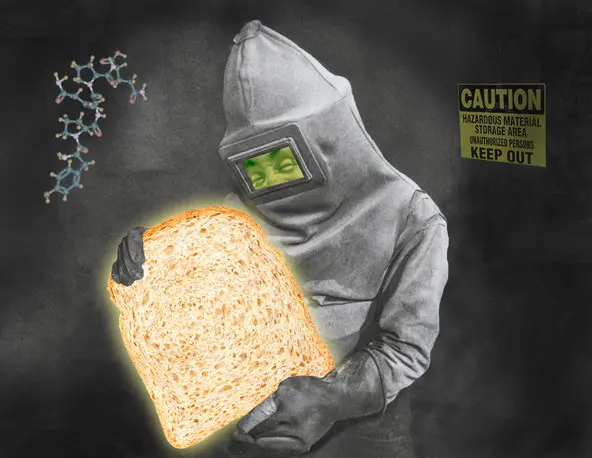
The new trend and its dangerous excesses…
If you wish to work on your emotions, your nutrition or other blockages, feel free to contact me. Together we can look for a new balance and greater inner freedom. This support does not replace medical care.
The agri-food industry is riding the “gluten-free” wave to satisfy a growing clientele eager to regain better health.
This gives rise to products packed with additives and modified starches that create other problems, such as weight gain linked to hyperglycaemic components and new digestive issues.
The industrial route, even organic, does not seem to be the right one.
So where should we turn?
First toward more raw and unprocessed cereals, such as organic spelt and einkorn, more traditional crops that respect both the environment and the basic product.
Choose bread that has taken the time to rise with sourdough, baked by an artisan, rather than industrial soft loaves.
Favour naturally gluten-free whole foods — rice, quinoa, buckwheat, millet, vegetables, fruit, legumes — rather than packaged “gluten-free” substitutes that are often ultra-processed.
If you explore a gluten-free period, do it with guidance, ensure nutritional balance, and observe your energy, digestion and mood. Your body is the best feedback — alongside your doctor.
Nutrition is one of the three pillars of health I work with as an energy therapist in Caen, together with the emotional and the energetic.