


One of our childhood wounds: humiliation
We all carry, to varying degrees, emotional wounds born in childhood. Lise Bourbeau, in The 5 Wounds That Prevent You From Being Yourself, clearly identifies them: rejection, abandonment, humiliation, betrayal and injustice. Among them, the wound of humiliation deeply affects the need for dignity, respect and self-esteem.
Jacques Martel, in The Great Dictionary of Ailments and Diseases, reminds us that the body speaks. Ailments and diseases are often messages linked to unresolved thoughts, feelings and emotions. Humiliation frequently appears there as a conflict of wounded dignity, shame or fear of being put down.
Nonviolent Communication (NVC), developed by Marshall Rosenberg, offers a particularly illuminating perspective on this wound. It invites us to move beyond judgement (“I was humiliated”) towards observation, feelings, needs and request. Behind the pain of humiliation almost always lies a vital need for respect, dignity, belonging and self-esteem.
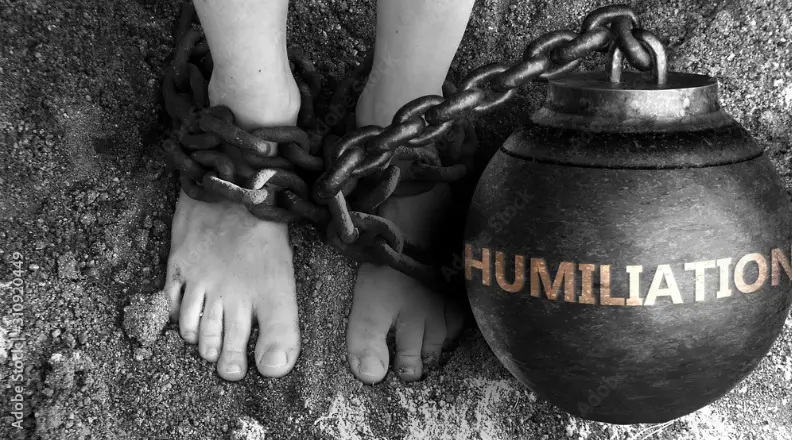
When and how does the wound of humiliation awaken?
According to Lise Bourbeau, this wound generally awakens between the ages of 1 and 3, most often in connection with the parent of the opposite sex. The child felt put down, mocked, criticised about their body, gestures, needs or way of being. It is not necessarily an intention to harm: a look of disgust, a remark about cleanliness, public mockery, a humiliating punishment can be enough.
The child feels hit in their pride and dignity. They often conclude unconsciously: “I am not worth much”, “I must make myself very small to be accepted”, or on the contrary “I must do too much to deserve to exist”.
The masochist mask
To protect themselves from the pain of humiliation, the child puts on a mask: that of the masochist.
The masochist tends to sacrifice themselves, to do too much for others, to apologise often, to put themselves in a position of inferiority. They may laugh at themselves before others do, accept unfair situations, or on the contrary subtly provoke rejection to confirm their belief. They find it hard to receive compliments and to take their place fully.
Their greatest fear is to be free… because freedom exposes them to the gaze of others and to the risk of being humiliated again.
In Nonviolent Communication, we look at this mask with empathy rather than judgement. The behaviour of sacrifice or self-devaluation is not a weakness: it is a strategy (sometimes clumsy) to meet legitimate needs for respect, safety and belonging. When we translate the language of the mask into the language of needs, the relationship with oneself changes.
The body tells the story
Lise Bourbeau describes frequent physical traits in people who strongly carry this wound:
- A body that may appear “too much” or on the contrary very controlled
- A tendency to carry weight (weight gain) or to restrict oneself excessively
- A posture sometimes stooped, an evasive or on the contrary defiant gaze
- Sensitive areas: throat, digestive system, skin, weight
- Difficulty feeling at ease in one’s body
The body seems to say: “I take up too much space” or “I do not deserve to exist fully”.
Associated ailments and diseases
Lise Bourbeau notably links to this wound problems related to dignity and self-image: weight disorders, skin problems, sore throats, digestive disorders, chronic fatigue, or pathologies that appear when the person feels put down or does not allow themselves to exist.
If you wish to work on your emotions, your nutrition or other blockages, feel free to contact me. Together we can look for a new balance and greater inner freedom. This support does not replace medical care.